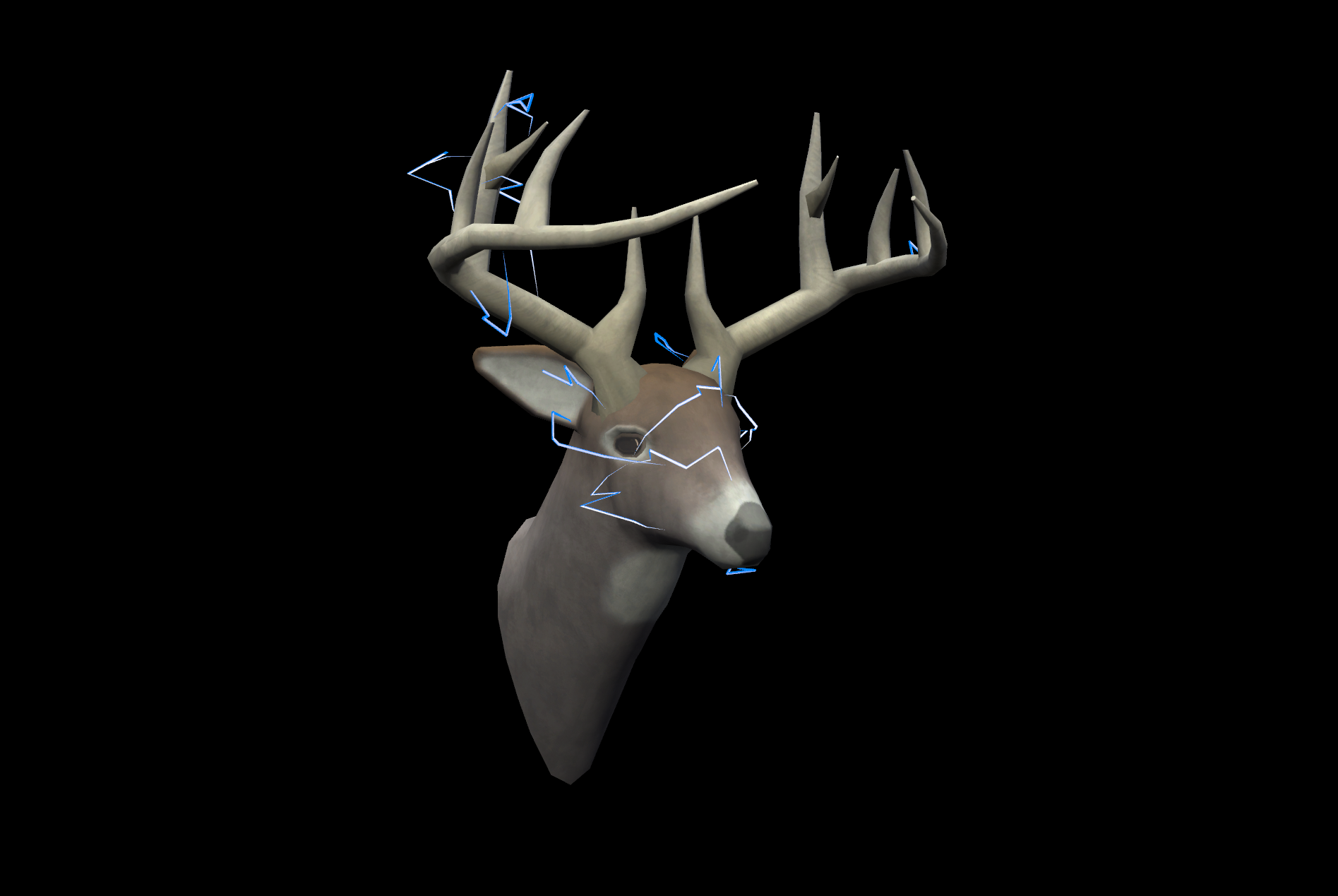
I wanted to try and create a linked structure from a particle burst without using the ribbon render, primarily because ribbons are difficult to control and because they are more expensive than mesh particles.
There are a range of uses for such an effect, such as for electrical arcs, a spider’s web or maybe bands of slime.
To create this system I decided to start simple and join 2 points floating aimlessly in space.
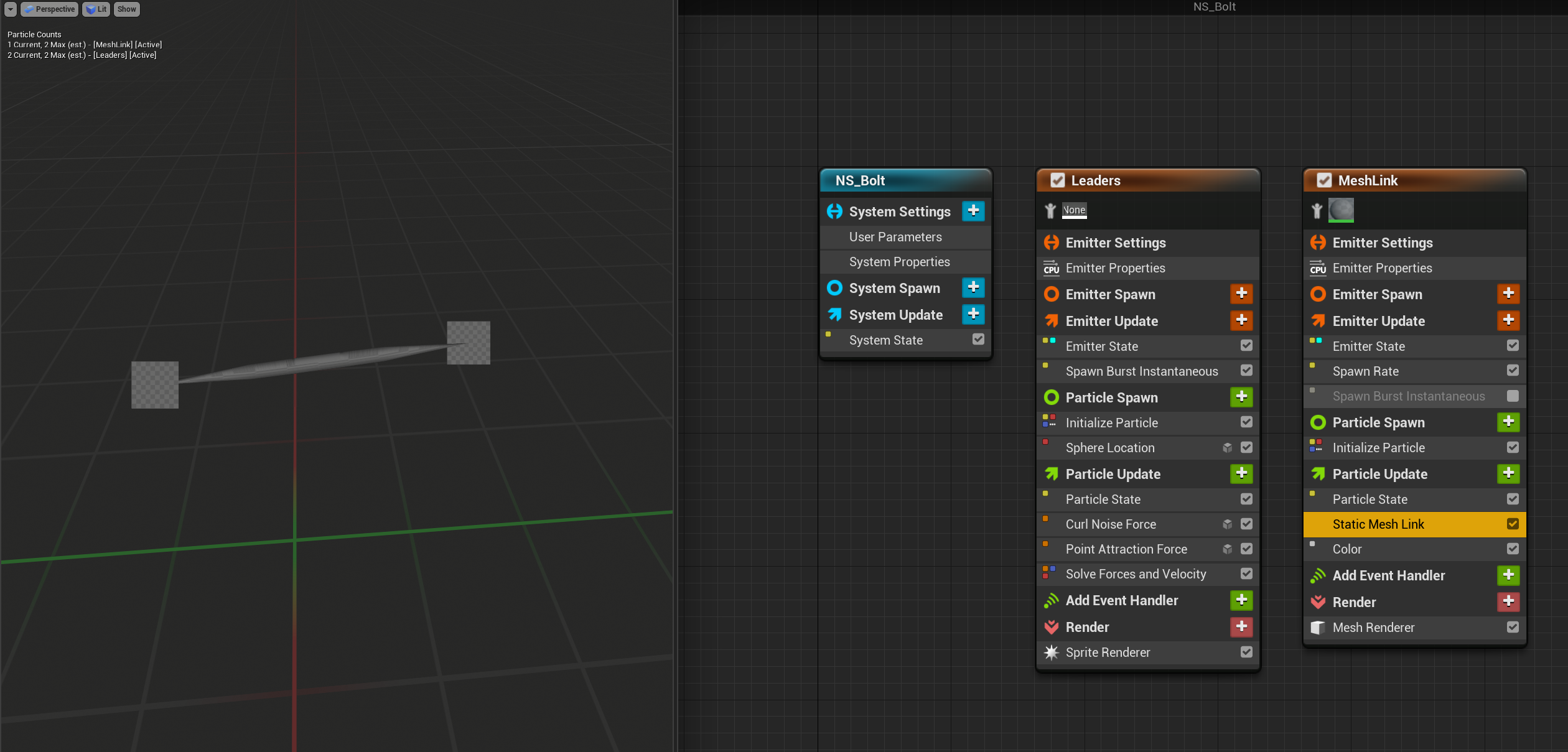
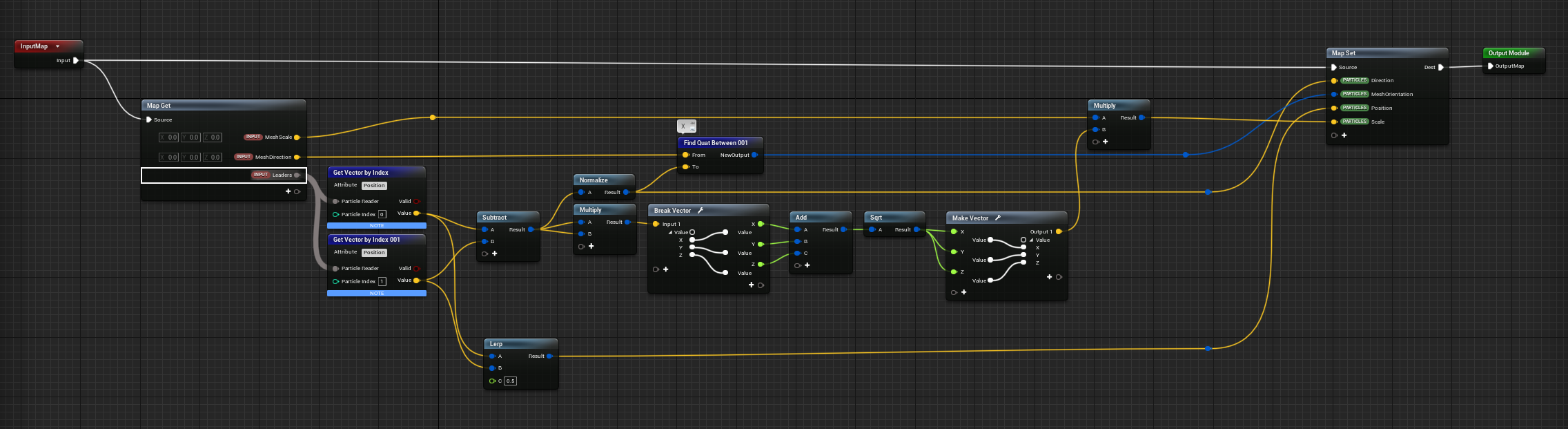
With that proof of concept achieved, I wanted to make the system more versatile so it could be used in different scenarios:
- Multiple leader points – lots of points connected by mesh links
- Static/Skeletal mesh sampling – allows the system to be used with meshes in the environment
Multiple positions sampled on a static mesh, connected by static mesh particles
Electrical arcing effect – multiple point pairs sampled on static mesh with static mesh arcs connecting them
The green slime bands demo above was created in much the same way as the original 2-particle concept, just with more particles.
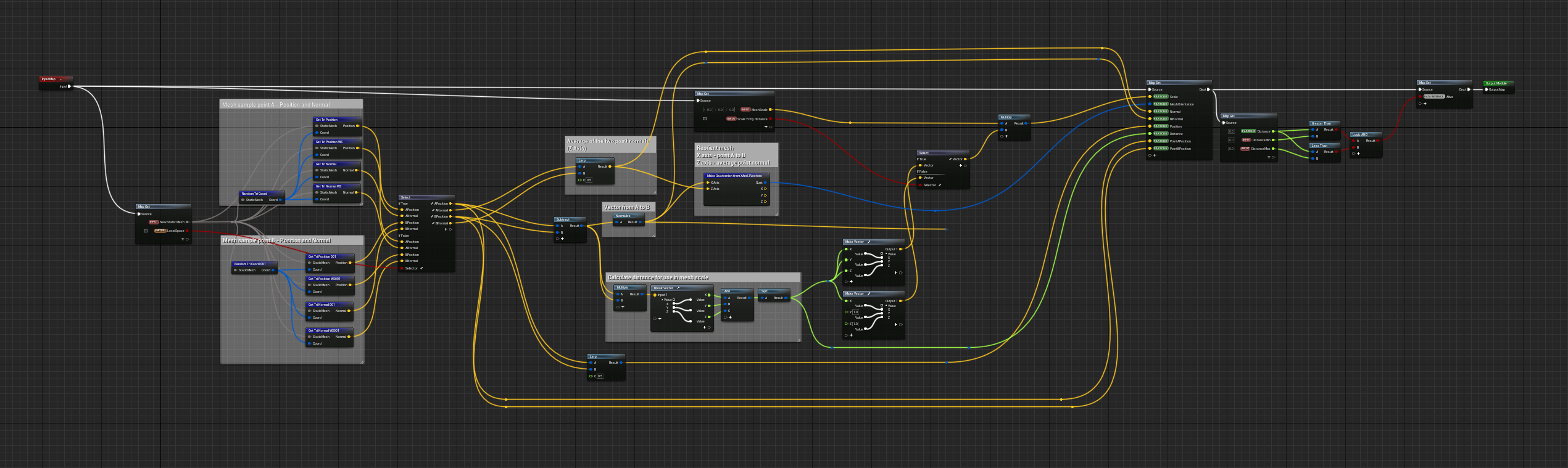
For the electrical arcing effect I developed the module script further so that it can be used in both world and local space, and I set it up to read the normals of the sampled mesh vertices for use in orienting the mesh links outwards and also for driving the mesh link velocity.
Leave a Reply